Across Africa and around the world, policymakers, researchers, and practitioners are facing an increasingly complex landscape with competing priorities, shrinking budgets, new technologies, and urgent social challenges. In this context, evidence-informed policymaking (EIP) has never been more important. Governments and institutions are seeking practical ways to make better use of data, research, and local knowledge to shape decisions that are equitable and effective.
Over the past several years, partners across the continent, including the Evidence Policy Action Centre of Excellence, or EPA Centre (led by the African Center for Equitable Development (ACED)), and the Alliance for Evidence and Equity in Policy-making in Africa, or AEEPA (led by the African Institute for Development Policy (AFIDEP)) through the Africa LEEPS Partnership, have invested heavily in training and mentorship to build the skills of policymakers, parliamentarians, researchers, and civil society actors. These initiatives have trained more than two thousand evidence actors across at least a dozen countries, offering hands-on learning in topics ranging from AI and GIS to evidence synthesis, gender analysis, and knowledge translation.
These experiences have shown what high-quality capacity strengthening can achieve. But they also raise a bigger question: How do we move from resource-intensive, one-off capacity strengthening approaches to models that are scalable, sustainable, and equity-centered?
What We Learned from Current Approaches
Both the EPA Centre and AEEPA provide rich insights into how capacity strengthening currently works and where it struggles. The two initiatives differ in structure, with EPA Centre’s blending virtual modules with in-person workshops, and AEEPA’s using five-day residential trainings and six-month mentorships, but they reveal common themes.
First, when training is contextualized and practical, people learn. The EPA Centre’s experience shows strong gains in knowledge and confidence, such as a measurable increase in understanding of gender integration and near-universal improvement in participants’ ability to apply new skills. Open-source tools like QGIS (a geographic information system software), KNIME (a platform for end-to-end data science), and KoboToolbox (a software used to collect, analyze, and manage data) made the learning sustainable, ensuring participants could continue using them beyond the workshop. AEEPA found that hands-on evidence synthesis exercises, for example, moving from defining policy questions to drafting evidence briefs, helped participants see the real-world application of concepts.
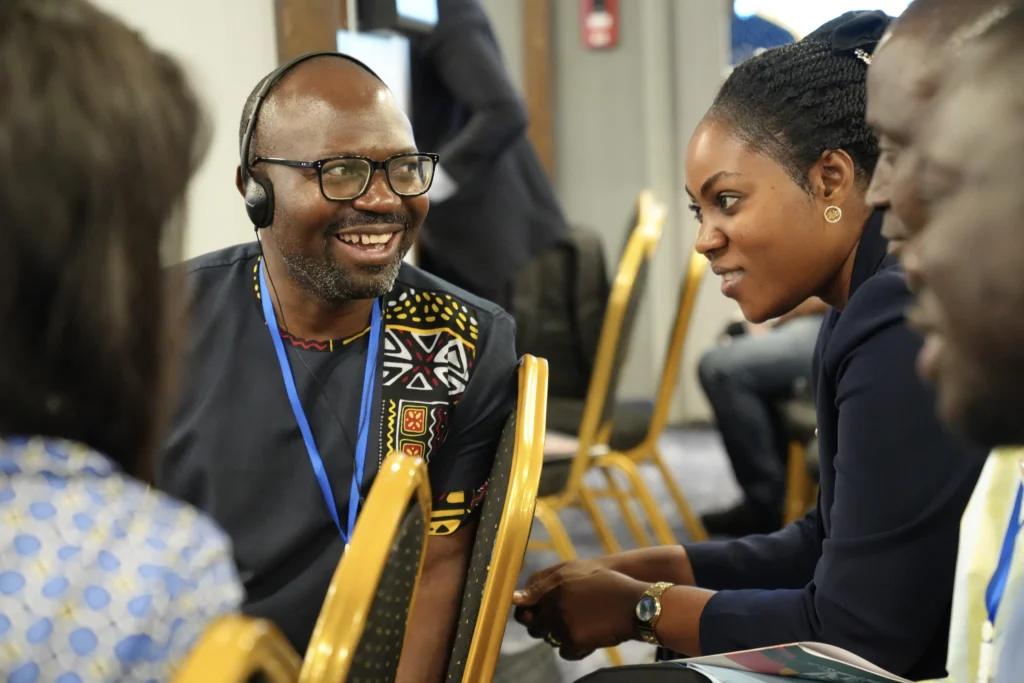
Second, the diversity of participants enriches learning. Bringing together researchers, policymakers, civil society, and parliamentarians sparked cross-sector dialogue and strengthened networks for continued collaboration.
But the programs also surfaced real challenges.
- Short workshops leave limited time for deep practice. Participants consistently asked for longer sessions or more spaced-out learning to internalize concepts rather than two-to-five-day long sessions. Both the EPA Centre and AEEPA saw persistent conceptual confusion, especially around equity versus equality, gender integration, and the mechanics of evidence quality appraisal, showing that some topics require repeated reinforcement, not one-time exposure.
- Diverse participant profiles, while valuable, required facilitators to manage wide differences in baseline skills. Beginners felt overwhelmed while advanced participants wanted more depth. This unevenness can make it challenging to develop materials and can dilute learning.
- Mentorship proved difficult to sustain. Although participants valued the mentorship, staff were overstretched, mentees had full-time jobs, and remote support often lacked the continuity needed to embed new practices. AFIDEP noted that even motivated trainees struggled to stay engaged without strong institutional support and dedicated in-house expertise.
- Challenges in the political economy of participation. In government workshops, participant selection is often driven not by interest or role relevance, but by per diem incentives. Senior officers, although influential, struggled to stay engaged due to workload demands. Early-career officers and junior researchers who have fewer competing obligations and a stronger drive to grow, often produced higher-quality outputs and engaged more consistently.
Together, these lessons highlight a central truth: Current approaches are impactful, but they are resource-heavy and not yet fully aligned with the realities of policymakers’ time, motivation, and institutional contexts.
So what needs to change?
Capacity Strengthening: Three Shifts We Need
1. From One-Off Trainings to Segmented, Flexible Pathways
We need to move away from “everyone learns everything in a few days” toward tiered, modular, and flexible learning.
Modular design that includes introductory and advanced tracks would allow participants to learn at the pace and level that suits them. Technology-enabled, self-paced courses, ideally culminating in certificates, can help identify who is genuinely motivated while reducing costs. Embedding EIP and equity curricula in universities, civil service academies, and professional training institutions ensures the next generation of policymaking graduates with core competencies already in place.
This shift embraces the reality that people learn differently and that institutions need sustained, scalable approaches.
2. From External Support to Embedded Expertise
Workshops alone are not enough. To make gender equity, ethics, research rigor, and evidence use everyday practice, we need embedded expertise inside institutions.
Gender and equity experts, evidence synthesis specialists, and data governance practitioners should be integrated into ministries, agencies, and parliaments, not only brought in as external consultants. Institutional systems like research protocols, ethics reviews, budgeting processes, and donor requirements must reinforce good practices. And finally, internal champions are key advocates to help ensure that knowledge stays within the institution, even as staff rotate or leadership shifts.
This shift moves from skills that individuals hold to capacities that institutions sustain.
3. From Events to Ecosystems
Finally, capacity strengthening must evolve from one-off events for individuals into sustained ecosystems that nurture ongoing learning and collaboration.
Rather than ending when a workshop concludes, support should continue through vibrant communities of practice. Online platforms, WhatsApp groups, and alumni networks are all spaces where peers can exchange ideas, troubleshoot challenges, and continue learning long after the conclusion of formal training. These communities can be complemented by periodic refresher sessions, peer mentoring arrangements, and thematic deep dives that reinforce learning and help participants apply new skills in real policy contexts.
Incentives also matter. Recognition mechanisms such as certificates, award ceremonies, or opportunities to showcase one’s work can encourage continued engagement, especially in self-paced or blended learning pathways. Equally important is tracking progress over time. Follow-up evaluations allow institutions to understand how well new skills translate into improved decision-making or institutional change, and where additional support may be needed.
Through these interconnected elements, capacity strengthening becomes an ecosystem that supports individuals, strengthens institutions, and ensures that evidence-informed and equity-centered policymaking continues to grow long after the initial training ends. New policymakers would enter the workforce already fluent in EIP and gender-responsive approaches, strengthening the end outcomes. Mentorship would become an embedded practice, and gender equity would become a fundamental lens for interpreting and applying evidence, rather than an add-on.
Building for Sustainability
The next frontier of capacity strengthening is not simply delivering more high-quality workshops, it is reimagining the systems that support meaningful, lasting evidence use.
The experiences of the EPA Centre and AEEPA show that policymakers, researchers, civil society partners, and other actors in evidence systems are eager to learn, motivated to apply new skills, and capable of producing high-quality evidence products when given the right tools and environment. But they also reveal that our current models, while effective, are not yet sustainable at scale.
To meet the moment, we must experiment with new approaches, adapt to learners’ realities, and institutionalize what works. Considering institutions and ecosystems, rather than individuals, will enable a shift in the longevity of the approaches. By shifting from one-off events to ecosystems, from external support to embedded expertise, and from generic training to flexible learning pathways, we can build a foundation where equitable, evidence-informed policymaking becomes the norm, not the exception.
At the end of its first two years, the Africa LEEPS Partnership is presented with an opportunity to respond to critical lessons and challenges with new approaches to advancing and widely expanding capacities for evidence use in sub-Saharan Africa. The depth and breadth of the lessons we have learned gives us a solid foundation to build shared tools, common approaches, and responsive evidence support — so that we can better reach policymakers, researchers, and other key actors in evidence systems. We continue to be guided by the powerful potential of collaboration and working closely together, embodying the widely known proverb “if you want to go faster, go alone, if you want to go further, go together”.